
HISTORY OF MUSÉE D’ORSAY
Orsay Museum History
The Musée d’Orsay is a world-renowned museum housed in a former Orsay railway station, the Gare d’Orsay. Originally constructed as a railway station, the museum is located on the Seine River’s left bank at the Palais d’Orsay site, opposite the Tuileries Gardens. It is famous for its extensive collection of French art, particularly the collection of Impressionist and Post-Impressionist works of art. Its collection covers the period from 1848 to 1914, presenting paintings by artists such as Monet, Van Gogh, Degas, and Renoir. In addition to paintings, sculptures, and decorative arts, the museum also displays a significant photography collection. The Musée d’Orsay is regarded as one of France’s most significant art museums, offering a unique insight into the development of art in the late 19th century and early 20th century.

Gare d’Orsay
In 1900, Paris hosted its fifth Universal Exhibition, and architect Victor Laloux was commissioned to design a new railway station and luxury hotel. Located on the Palais d’Orsay site along the left bank of the Seine River, the station was strategically placed for easy access to the Exhibition sites.
The team of architects, Victor Laloux, Lucien Magne, and Émile Bénard, designed the station in the Beaux-Arts style and combined classical elements with modern materials like steel and glass. While the design was grand and elegant, some critics thought it was too traditional and expected a style more in line with the latest engineering and technological trends of the time.
The station was the first to accommodate electrically powered trains, which produced no smoke or steam. This innovation allowed the entire station to be covered with a glass roof, creating a large, open hall for passengers and offering more space for decorative features. The station also introduced modern technologies such as ramps and lifts for luggage and elevators for passengers.
The station with a short life
The Gare d’Orsay served as the main station for southwestern France’s railways until 1939 when its short platforms could no longer accommodate the longer trains that were becoming common. After 1939, the station continued to serve suburban trains but became outdated as railway technology advanced. In 1945, it was used as a reception center for repatriated prisoners, and in 1958, General de Gaulle announced his return to politics there. The station also served as a film set in 1969. By the 1970s, it was mostly unused.
Preserving Gare d’Orsay
Gare d’Orsay narrowly escaped demolition and managed to remain preserved. Initially, plans were made to replace the station with office buildings, but because of its important location, the plans were abandoned with a new focus on building an international hotel instead. However, in 1971, the government rejected the hotel plans, citing the station’s size and design as unsuitable. This decision ultimately saved the station from destruction. The station was preserved for its historical and architectural significance, and in the following years, it was transformed into a museum, eventually becoming the Musée d’Orsay. The Gare d’Orsay finally closed in 1973 as a railway station due to its inability to meet the demands of modern rail transport.


From train hub to iconic museum
Plans to convert the station into a museum began in the early 1970s, driven by the need for more space to house France’s growing national art collections. By 1977, the plans had been finalized by President Valéry Giscard d’Estaing. The National Museum of Modern Art had moved to the Pompidou Centre, leaving behind works that no longer fit into its focus. The Jeu de Paume was overcrowded, and the Louvre needed more room to store late 19th-century art. The Musée d’Orsay took pieces from these museums and expanded its collection to include photography, decorative arts, and architecture.
The idea of transforming the station into a museum was proposed to link the Louvre and the National Museum of Modern Art. President Georges Pompidou approved the idea, and a study was commissioned in 1974.
In 1978, Jacques Duhamel, the Minister for Cultural Affairs, protected the Gare d’Orsay by listing it as a historic monument.
The making of a museum
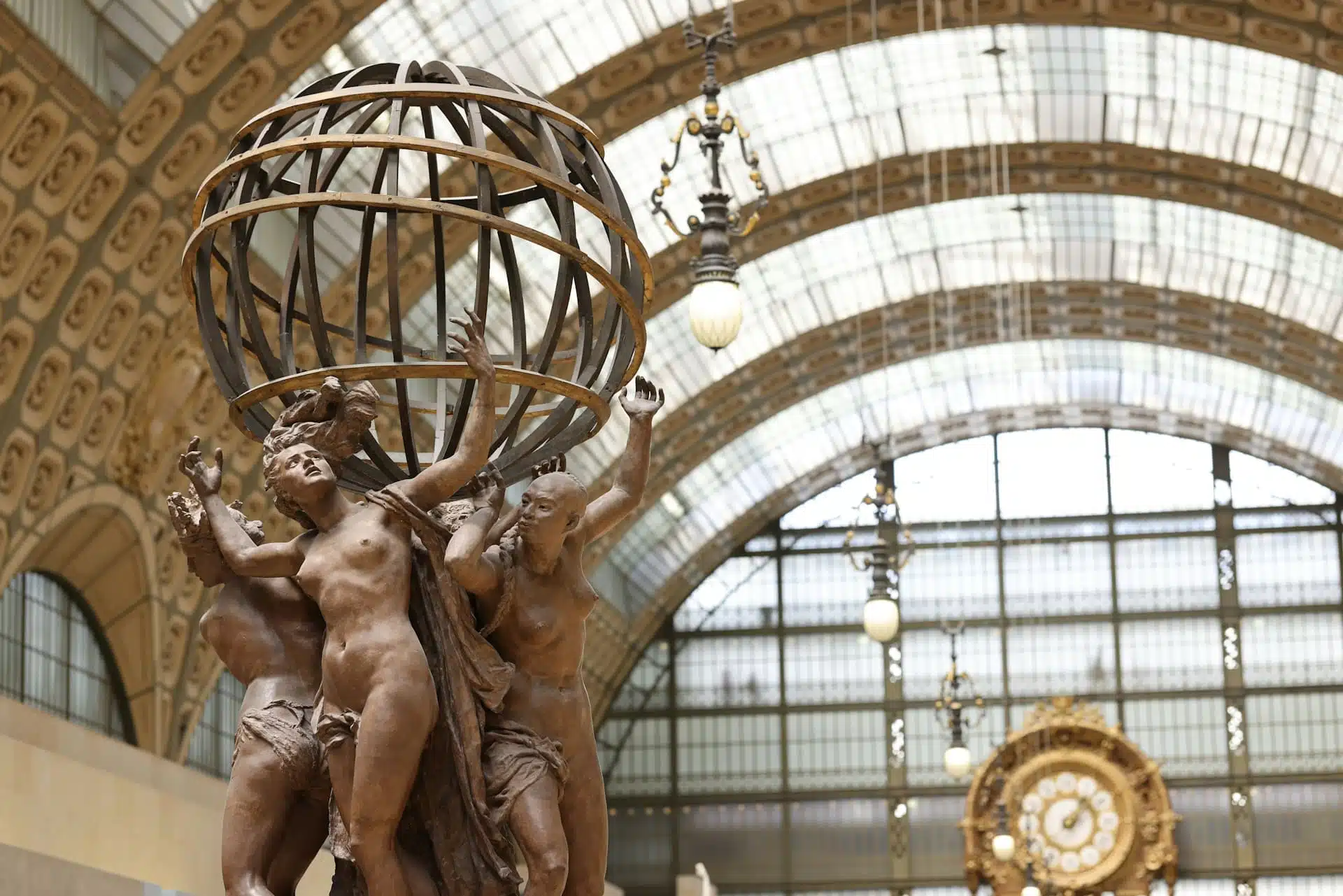
In 1978, a competition was held to design the new museum, and the team from ACT Architecture, including Pierre Colboc, Renaud Bardon, and Jean-Paul Philippon, won the contract. They expanded the building by adding 20,000 square meters of space spread over four floors. In 1981, Italian architect Gae Aulenti was selected to design the museum’s interior. She arranged the galleries across three levels beneath the station’s iconic barrel-vaulted ceiling, preserving the original train platforms while creating functional spaces for displaying art. The square next to the museum displays six allegorical sculptures originally created for the Exposition Universelle.
Opening of the museum
By the time the museum opened, it had acquired an impressive number of paintings. Some artworks from the Musée du Luxembourg were moved there to match its focus on art from 1848 to 1914. The museum was ready to display its exhibits in July 1986, and it took six months to install around 2,000 paintings, 600 sculptures, and other works.
The Musée d’Orsay officially opened in December 1986, with President François Mitterrand attending the ceremony.


World’s largest Impressionists & Post-Impressionists collection
The Musée d’Orsay is home to an impressive collection of 19th and early 20th-century art, specifically focusing on French art. The museum houses the largest collections of Impressionist paintings, featuring iconic paintings by Claude Monet, Renoir, and Degas, alongside Post-Impressionist masterpieces like Van Gogh’s Self-Portrait and Cézanne’s Montagne Sainte-Victoire. The museum also highlights Realism through Courbet and Millet, Romanticism with works by Delacroix and Géricault, and an extensive collection of sculptures by Rodin and Art Nouveau designs by Gallé and Guimard. It also includes extensive photography collections, Symbolist art, and French Academic works by Bouguereau and Gérôme. Together, they provide a comprehensive journey through the evolution of 19th-century art.
Orsay Museum today
Today, around 3,000 art pieces are on display at the museum. The museum is undergoing significant renovations to create space for new works and improve the visitor experience while preserving its rich cultural heritage. The museum attracts millions of visitors every year, making it one of the most popular museums in Paris, alongside the Louvre. In 2023, nearly 3.9 million people visited this iconic museum.
Step into the world of art and history at the Musee d’Orsay!
Join our guided tours & explore its art and rich heritage!
Avoid a big crowd
Orsay Museum Small-Group Tour
Join a small group tour of the Musée d'Orsay for an intimate, guided experience of its world-renowned art collection. Explore masterpieces by Monet, Van Gogh, Degas, and Renoir while your expert guide provides interesting insights into the art and the artists. Learn about the history of this unique museum, which was once a railway station. Enjoy a personalized, engaging tour in a smaller group setting, ensuring a more relaxed and informative visit.
Customize the tour's itinerary
Orsay Museum Private Tour
Experience the Musée d'Orsay like a VIP with a private tour, offering an exclusive and personalized journey through one of Paris' most iconic museums. Enjoy priority access and a more intimate visit to the museum. Your expert guide will lead you through Monet, Van Gogh, Degas, and Renoir masterpieces, providing in-depth insights into the art and history. Explore at your own pace, with special attention to your interests. Optional hotel pickup is available for a comfortable and unforgettable art experience.